
Security Camera Specifications, Explained Plainly
Megapixels, lux, IP ratings, focal length and bit rate. What each one actually does for you, and which ones quietly do not matter.
- What megapixels really buy
- Why lux matters more than MP
- IP and IK ratings decoded
- The spec nobody mentions
Why this matters
The Spec Sheet Is Not Ranked by Importance
Every camera is sold on its highest number, and that number is almost always resolution. It is the easiest thing to print on a box and the easiest thing to compare.
It is also not the spec that decides whether you can identify someone. Placement decides that first, then low light performance, then lens choice, and then resolution somewhere after all three.
None of this is complicated once somebody explains it in order. That is what this page does.
It is how far the camera is from the thing you want to see. A modest camera at three metres beats an excellent one at fifteen, every time.
The specs that matter
Six Numbers and What They Actually Do
In rough order of how much difference each one makes.
Focal length, in millimetres
The one nobody reads and the one that matters most. A short focal length sees wide and far away. A longer one sees narrower but with usable detail further out. Getting this wrong is why footage shows an event without showing a person.
Low light performance, in lux
The minimum light a camera needs to produce a usable picture. Most incidents happen at night, so a camera that is excellent at noon and useless at two in the morning is useless for the job. Look for the lux figure in colour, not just infrared.
Resolution, in megapixels
Real but overrated. More pixels help only if the subject fills enough of the frame to use them, which comes back to focal length and distance. Beyond a point, extra megapixels mostly consume storage.
IP rating, two digits
Dust and water resistance. IP66 or IP67 is what you want outdoors in Melbourne. The first digit is dust, the second is water, and higher is better on both.
IK rating, impact resistance
How hard the housing is to break. IK10 is the practical maximum and it matters on anything reachable, particularly at ground level on a commercial site.
Bit rate, in Mbps
The one that quietly decides your retention. A higher bit rate means better quality and less recording time on the same drive. Two identical cameras set differently will fill a drive at very different speeds.
The one that decides everything
Identification Distance Beats Every Other Spec
There is a standard way of thinking about camera coverage that installers use and consumers rarely hear. It describes four levels, and each needs the subject to occupy more of the frame than the last.
Monitoring tells you something is happening. Detection tells you it is a person. Recognition tells you it is probably someone you know. Identification tells you who, to the standard that is actually useful afterwards.
Each step up means either moving the camera closer or using a longer lens. No amount of resolution substitutes for it, which is why a single well placed camera often outperforms four badly placed ones.
- Monitoring: something is happening in this area
- Detection: that is a person rather than an animal
- Recognition: that is probably someone familiar
- Identification: that is who it is, usefully
- Every approach needs one camera at identification, the rest can be wider
Camera types
Six Shapes and What Each One Is For
The housing is not cosmetic. Each shape suits a different position.
Turret
The default for most residential positions. Easy to aim, no dome to cause infrared glare, and it looks deliberate rather than industrial.
Dome
Discreet and hard to reorient, which suits ceilings and anywhere reachable. The dome can cause infrared reflection if it is dirty or badly sealed.
Bullet
Obvious, which is the point. Visible deterrence with a long housing that suits a longer lens and a longer view.
PTZ
Pan, tilt and zoom, controlled remotely. Useful on a large yard, and frequently oversold on a suburban home where it will be pointing the wrong way at the moment it matters.
Doorbell
One approach, two way audio and delivery alerts. Does one job well and does not replace a system.
Solar and battery
For positions where running power is not sensible. The trade is a recharge cycle and a panel that needs winter sun, not summer sun.
Recent work
Where the Spec Choice Changed the Outcome
Three properties where the difference was lens and placement rather than resolution.
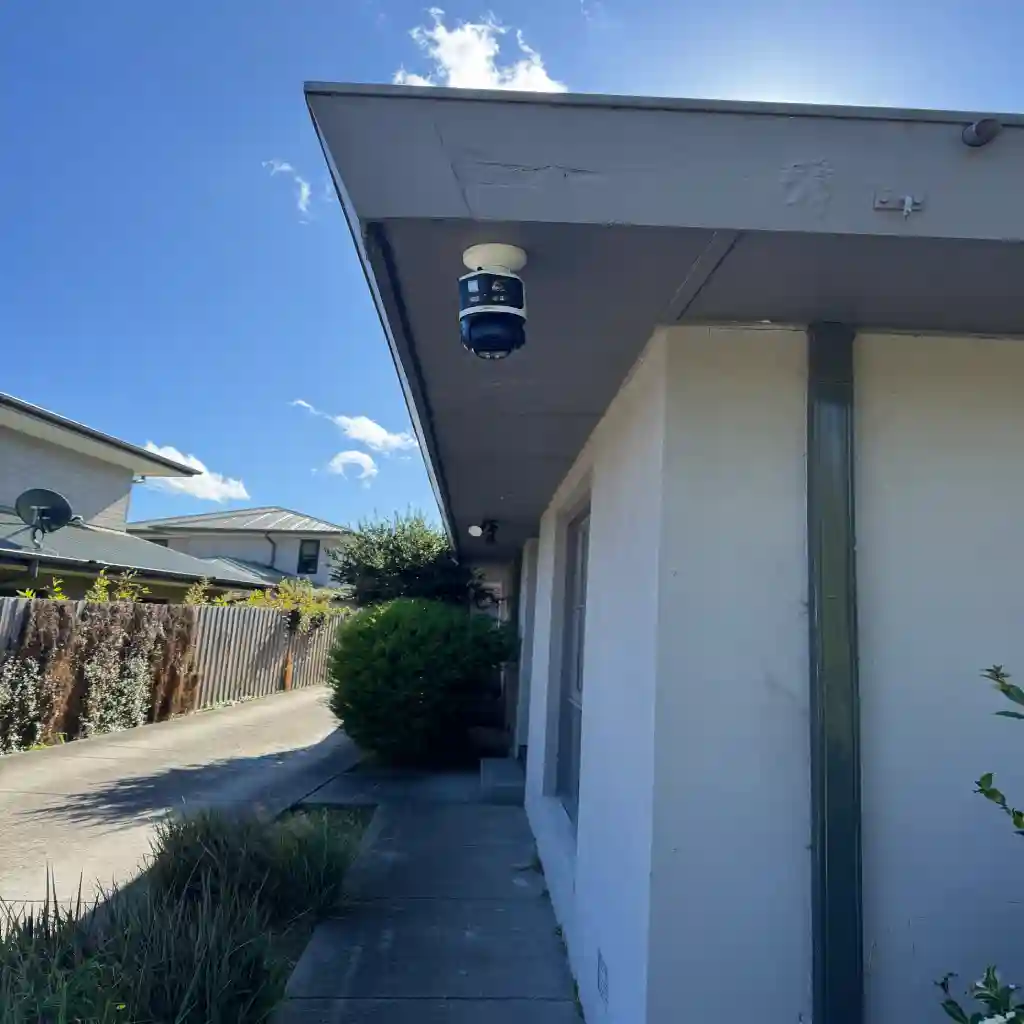
High, wide and useless
Six cameras, all wide angle, all mounted at gutter height. Every one recorded the top of a head. One repositioned at identification distance at the entry changed what the system could prove.
More on Mount Waverley ›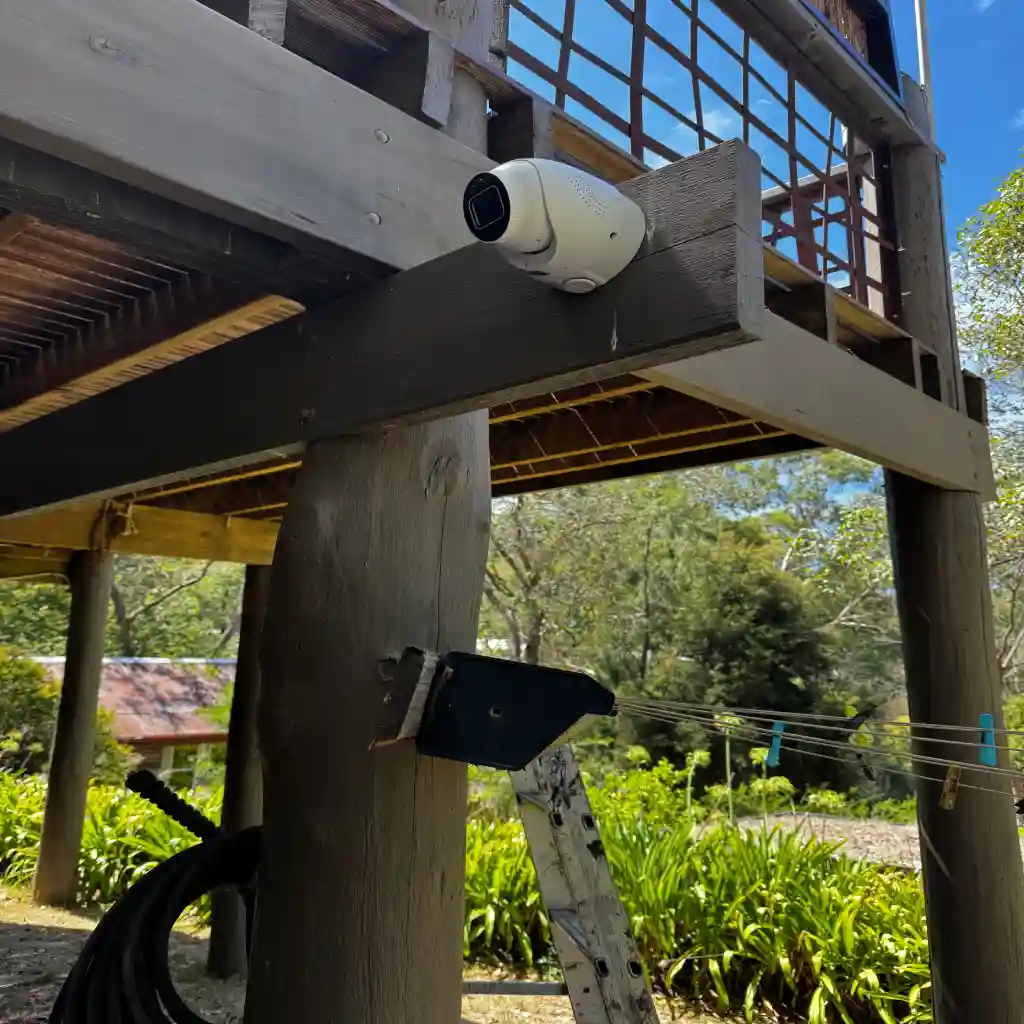
Lower was better
On a block that falls away, the standard eave position looked over the fence and down at nothing useful. Mounted lower under the deck, the same camera covered the approach properly.
More on Ivanhoe ›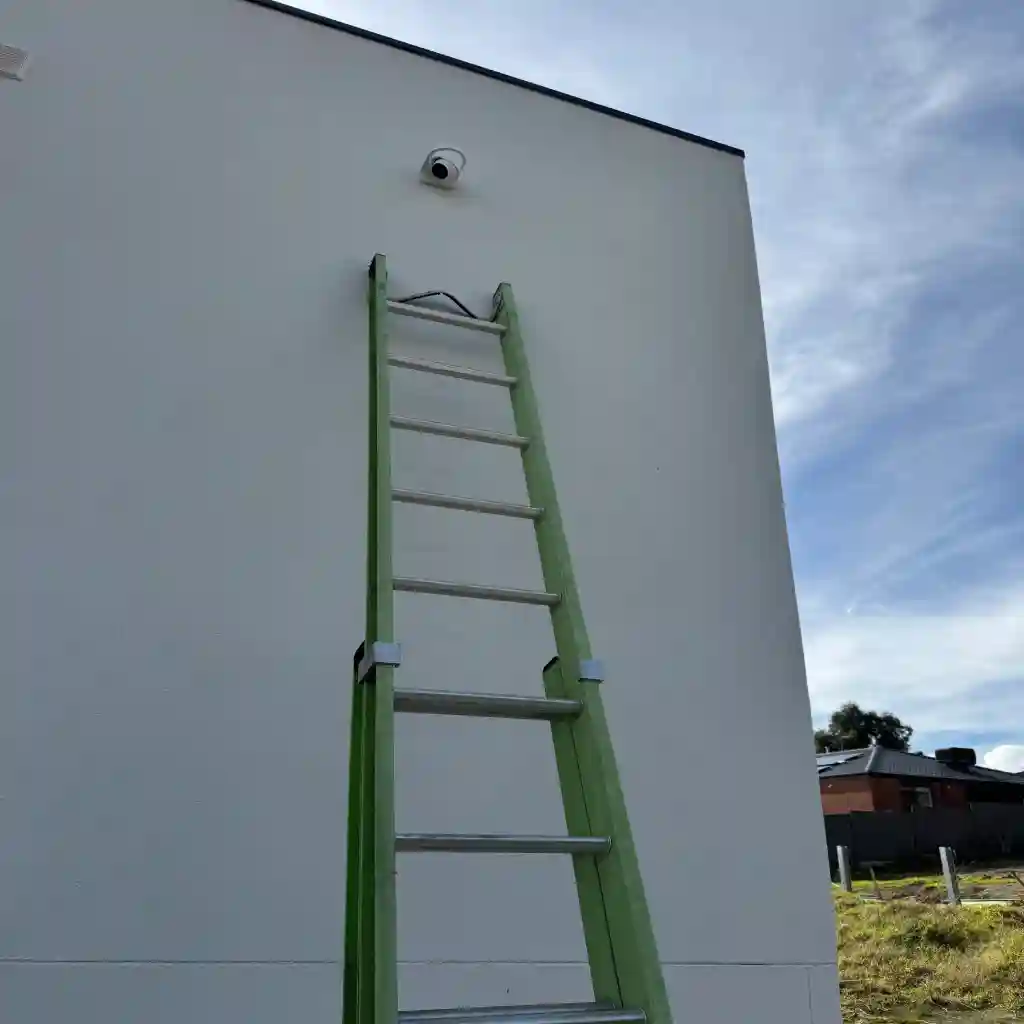
Night was the whole problem
Cameras that looked excellent in the showroom and produced nothing usable after dark. Replaced with units chosen on their low light figure rather than their resolution.
More on Box Hill ›Questions
Camera Specification FAQs
What is the most important camera specification?
None of them, strictly. The distance from the camera to the subject decides more than any number on the box. After that, low light performance and focal length matter more than resolution, which is the spec everything is sold on.
How many megapixels do I need?
Four to six is plenty for most residential positions when the camera is placed properly. Higher resolutions consume storage quickly, which reduces your retention. Placement first, then low light, then resolution.
What IP rating do outdoor cameras need in Melbourne?
IP66 or IP67 covers anything the weather here does. Higher ratings exist for submersion, which an eave mounted camera will never need.
Does colour night vision matter?
Yes, more than most specs. Clothing colour and vehicle colour are often the most useful details afterwards, and black and white infrared loses both. Look at the lux figure in colour mode rather than the infrared distance.
What is bit rate and why should I care?
It is how much data each camera writes per second. A higher bit rate means better quality and faster drive consumption. Two systems with identical cameras can hold very different numbers of days depending on how this is set.
Which camera type should I use?
Turret for most residential positions, dome where it is reachable or on a ceiling, bullet where visible deterrence matters, and PTZ only on large yards. Doorbell cameras do one job well and do not replace a system.
Where to next
Related Services and Guides
For placement advice on your own property see CCTV installation. For the brands we fit see brands we supply. Before choosing an installer, read our guide on comparing security quotes.
Get the Specs Chosen for Your Property
Distance, light and approach decide the camera, not the box. A licensed technician walks the property and specifies each position for what it actually needs.
Borderless Solutions. Licensed and insured. 81 Junction Rd, Nunawading VIC 3131. Monday to Saturday, 7:00 to 20:00.