
Portfolio · Know before you install
Security camera laws in Victoria
What you can record, what you cannot, and where neighbour disputes actually start.
Borderless Solutions installs security cameras across Melbourne under a Victorian security licence. This page sets out what Victorian law allows on a residential property, because the position that seems obvious is often the one that causes a problem two years later.
What Victorian law actually permits
Each answer below is written to stand on its own, so it makes sense whether you read the page or see it quoted somewhere else.
Can I point a security camera at my neighbour in Victoria?
Recording a neighbour’s private activity is restricted under the Surveillance Devices Act 1999, and Borderless Solutions reframes or zones out any position that would capture inside their windows, their yard or their private living space.
The distinction is between incidental and deliberate. A camera covering your own driveway that catches a sliver of footpath is different to one angled over a fence into a back yard. The second is what ends up at VCAT. Where a position genuinely has to cover a shared approach, we frame it to your own entry and draw the detection zone to exclude theirs.
Is it legal to record audio with a security camera in Victoria?
Audio is treated far more strictly than video under Victorian law, and Borderless Solutions disables audio by default on any camera that could pick up a conversation the participants would expect to be private.
Most modern cameras record audio and most installers leave it on because it is the factory default. Recording a private conversation you are not part of is a different category of act to filming your own driveway. On a front door camera near a footpath, or anywhere near a boundary, we turn it off unless there is a clear reason to keep it and you understand what it captures.
Do I need to tell people they are being recorded?
A home does not generally require signage, but a business recording staff or customers does have notification obligations, and Borderless Solutions advises on signage placement as part of any commercial installation.
For a workplace the obligations are broader than most people expect and cover where cameras may be placed as well as who is told. Toilets, change rooms and break areas are off limits. For a residential property signage is not usually required, though a visible camera and a sign at the front is often the most effective part of the whole system, because it changes behaviour before anything happens.
Can my landlord install cameras at a rental property in Victoria?
A landlord may cover common property and building exteriors but cannot record inside a tenancy or areas a tenant has exclusive use of, and Borderless Solutions will decline a position that crosses that line.
This comes up constantly on share houses and multi dwelling blocks. Cameras at a shared entry, in a common driveway or covering a communal bin area are usually fine. A camera pointed at a tenant’s door, into their private yard or anywhere inside their space is not. If the property is being let, the tenancy agreement and the tenant’s right to quiet enjoyment both matter, and an installer who ignores that is creating a problem for the owner rather than solving one.
What happens if a neighbour complains about my camera?
Most Victorian camera disputes are resolved by repositioning or by redrawing a detection zone rather than by removing the system, and Borderless Solutions attends to adjust cameras that have become a point of conflict.
The usual sequence is a conversation, then a formal complaint, then a tribunal application. It rarely gets past the first step if the camera is genuinely adjusted rather than defended. In practice a few degrees of angle or a privacy mask over part of the frame settles it, and it costs a service call rather than a legal process. This page is general information rather than legal advice, and for a live dispute you should get advice specific to your situation.
Where these problems actually begin
Almost every camera dispute we attend started with a position chosen for convenience rather than for coverage. The eave that was easy to reach happens to look across a fence. The corner that had power happens to frame a neighbour’s kitchen window. Nobody set out to record anyone, but the footage exists, and once a neighbour has seen the camera pointing their way the conversation is already difficult.
The second common start is a shared driveway. On a dual occupancy or a battleaxe block, one camera has to cover your entry while the other household uses the same strip of concrete every day. Framed wrongly it produces a recording of your neighbour coming and going, which is exactly the thing that turns into a dispute. Framed to your own door, with the detection zone drawn short of theirs, it protects you and records almost nothing of them.
Audio is the quiet one. It is on by default on most cameras and almost nobody switches it off. A camera at a front door near a footpath will pick up conversations between people walking past, and that is a different legal question to filming them.
Privacy masking is the tool most people do not know exists. Modern recorders let you black out a region of the frame permanently, so the camera covers your approach and the part that overlooks a neighbour is never recorded at all. It is a five minute configuration change and it settles most of these situations before they start.
Jobs where the boundary decided the position
Each links to the area page for that part of Melbourne, where the local conditions are set out in more detail.
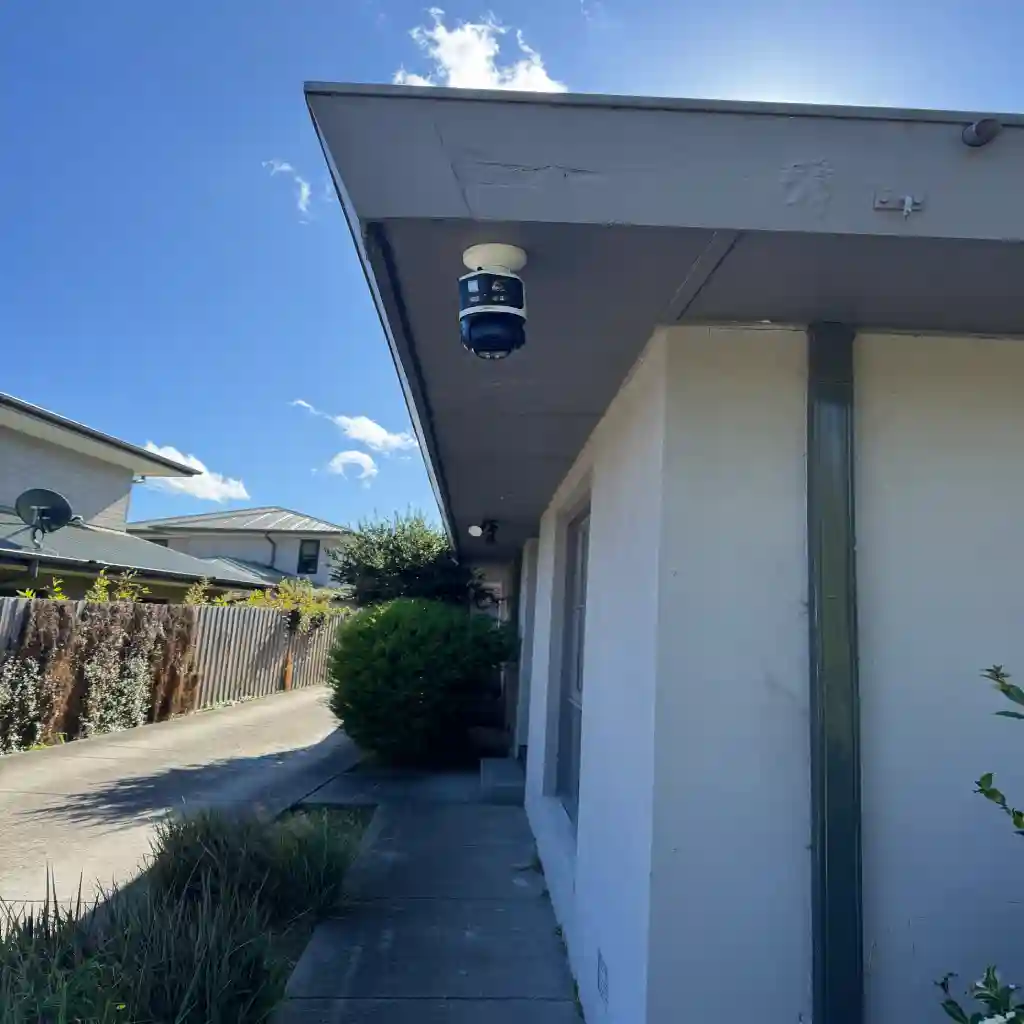
A camera recording the neighbours coming home
The front dwelling had a camera down the shared driveway and the rear dwelling was on it daily. It had become a dispute. Reframed to the owner’s own entry, detection zone redrawn to exclude the neighbouring door, separate coverage fitted at the rear.
Local detail: shared driveway work in Mount Waverley
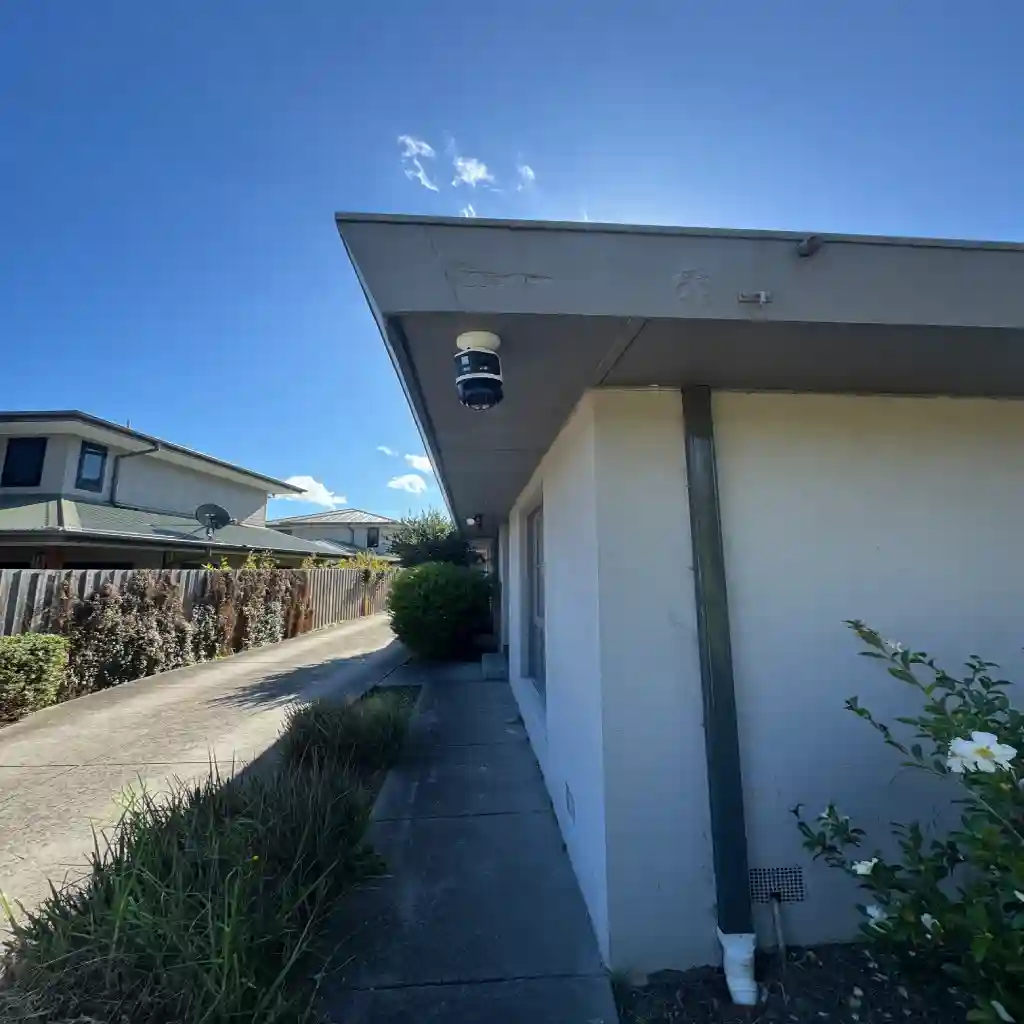
One driveway, four households
The only way in for four dwellings. We framed each camera to the household that owns it, masked the sections covering the other doors, and agreed the layout with all four before drilling anything.
Local detail: shared driveway coverage in Reservoir
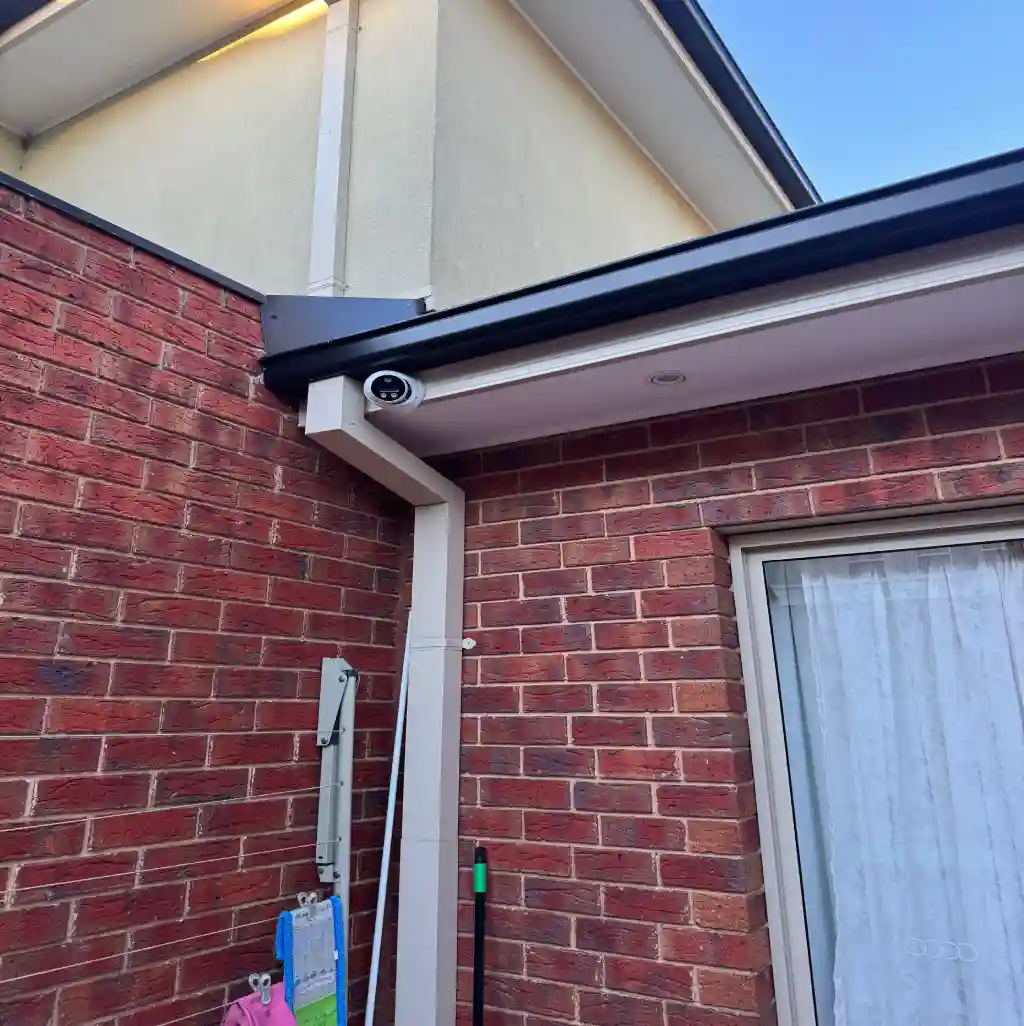
Agreed with the neighbour before it went up
Rather than fitting first and arguing later, we walked the driveway with both households and agreed one camera position and one detection zone that covered the approach without either party recording the other.
Local detail: shared access work in Box Hill South
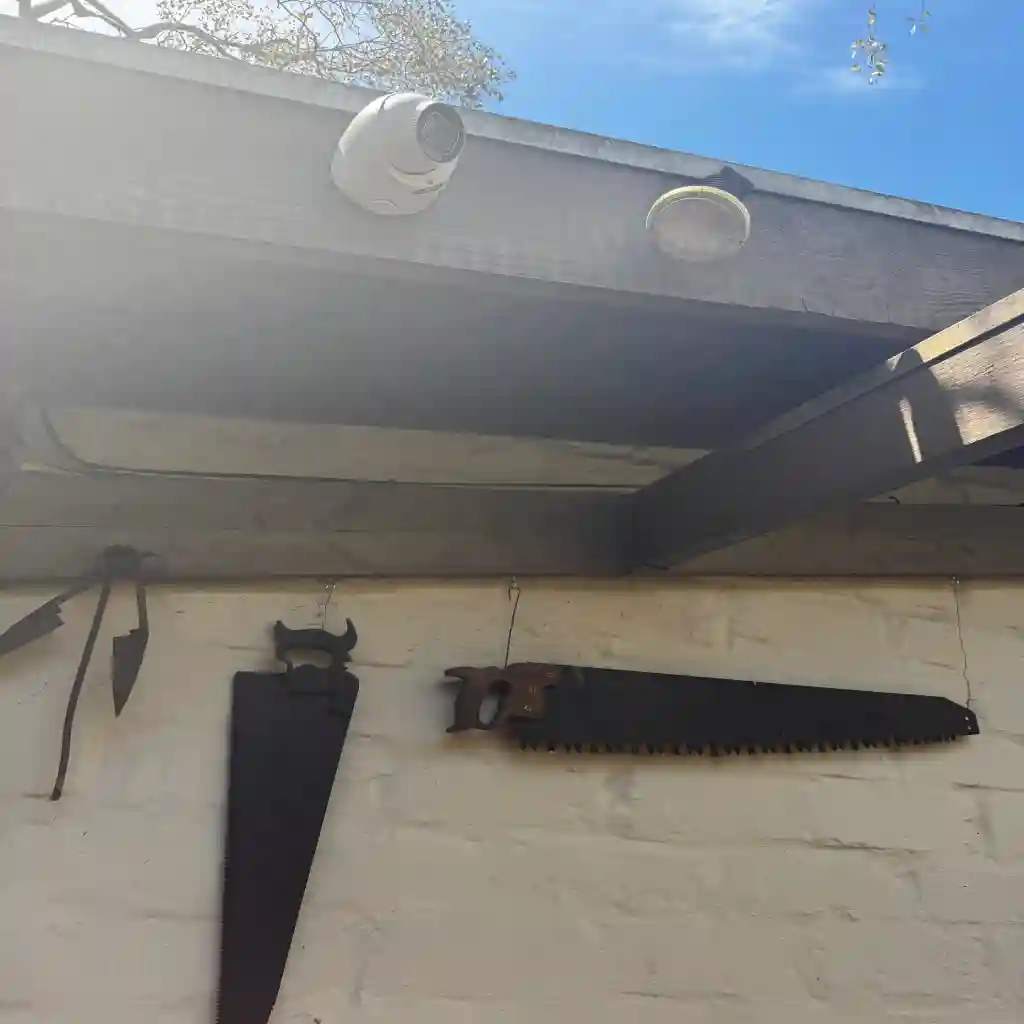
Residential door, retail door, metres apart
A camera covering the retail entry also framed the residential lobby, which is common property with different rules. We split the coverage, masked the overlap and documented what each camera sees.
Local detail: mixed use security in Carnegie
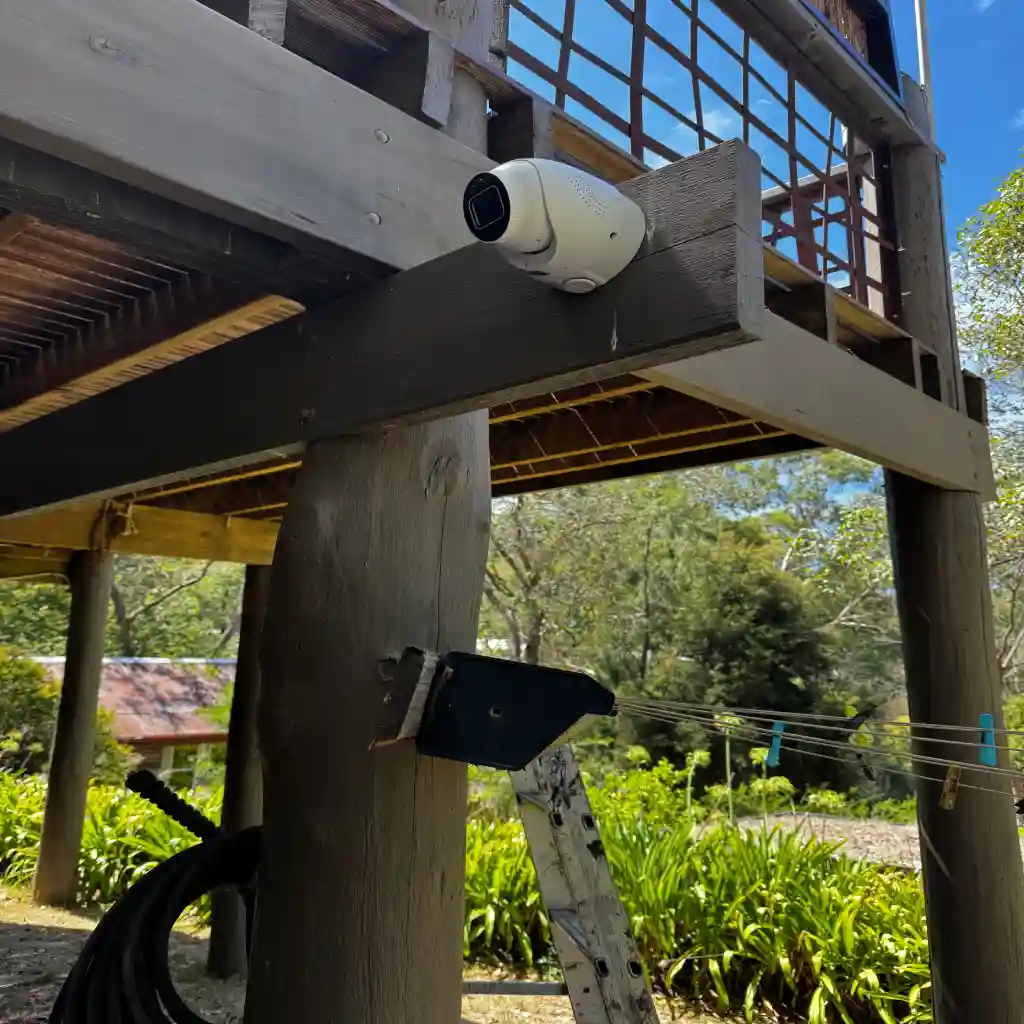
Height that kept the frame inside the fence
On a block that falls away, a standard eave mount looked straight over the rear fence. Mounting lower under the deck kept the useful coverage and took the neighbouring yard out of frame entirely.
Local detail: escarpment block work in Ivanhoe
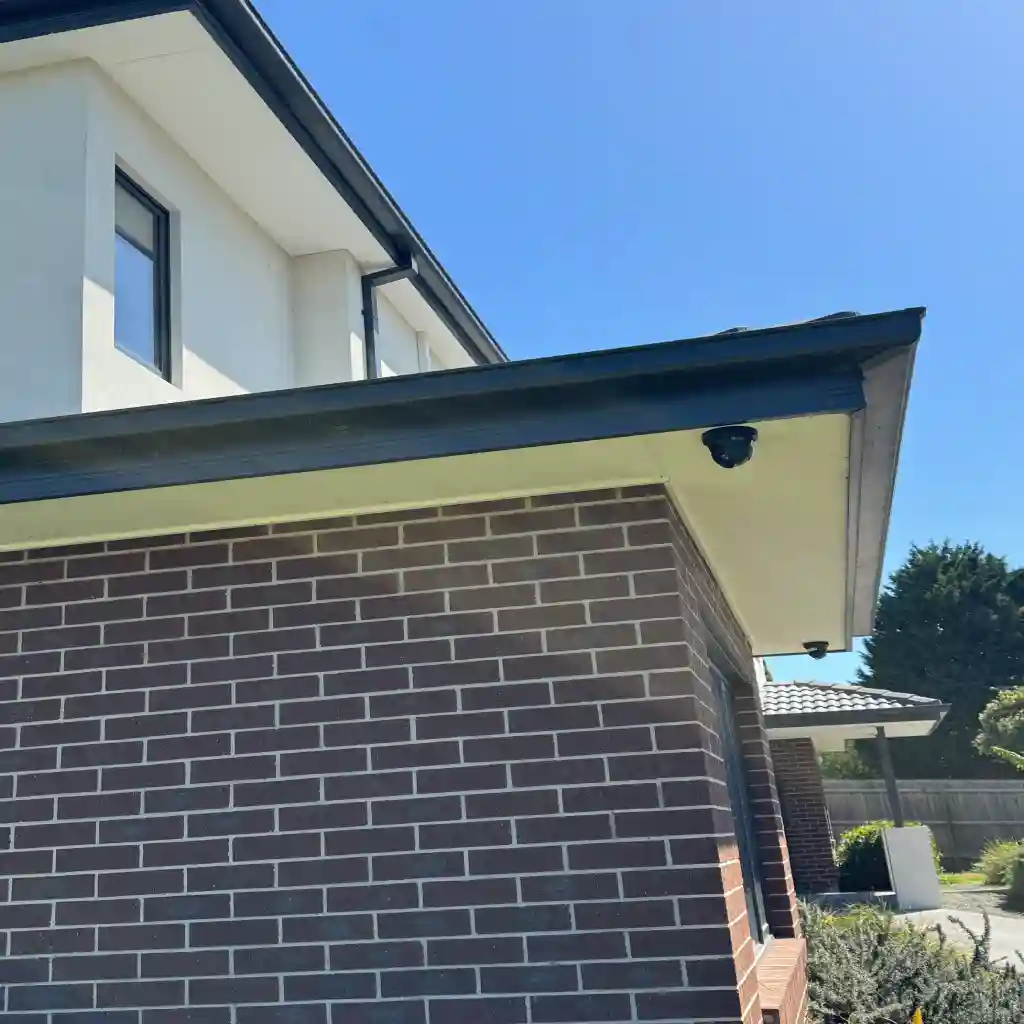
Two entries, no overlap
Terraces sit close enough that a wide lens covers your neighbour whether you want it to or not. A narrower lens on each of the two entries covered everything that mattered and nothing that did not.
Local detail: terrace coverage in Richmond
What to ask before anyone drills
Ask the installer to stand where each camera will go and tell you exactly what will be in frame, including what is beyond your boundary. If they cannot answer that, they have not thought about it.
Ask whether audio will be recording, and ask them to justify it if the answer is yes.
Ask whether the recorder supports privacy masking and whether they will configure it. Most do, and most installers do not bother.
If the property is tenanted or part of a body corporate, ask what approvals are needed before any equipment is ordered. Finding out afterwards is expensive.
This page is general information. For a live dispute, or for a workplace installation, get advice specific to your situation.
Get a fixed price for your property
A technician walks the property, tells you what each position will actually record, and puts a fixed price in writing. Free, and we will say plainly if a position you have asked for is a problem.
Licensed and insured. Security Licence Z67-511-50S and ACMA Cabler Licence T59216. 5.0 from 82 Google reviews. Head office 81 Junction Rd, Nunawading VIC 3131. Monday to Saturday, 7:00 to 20:00.